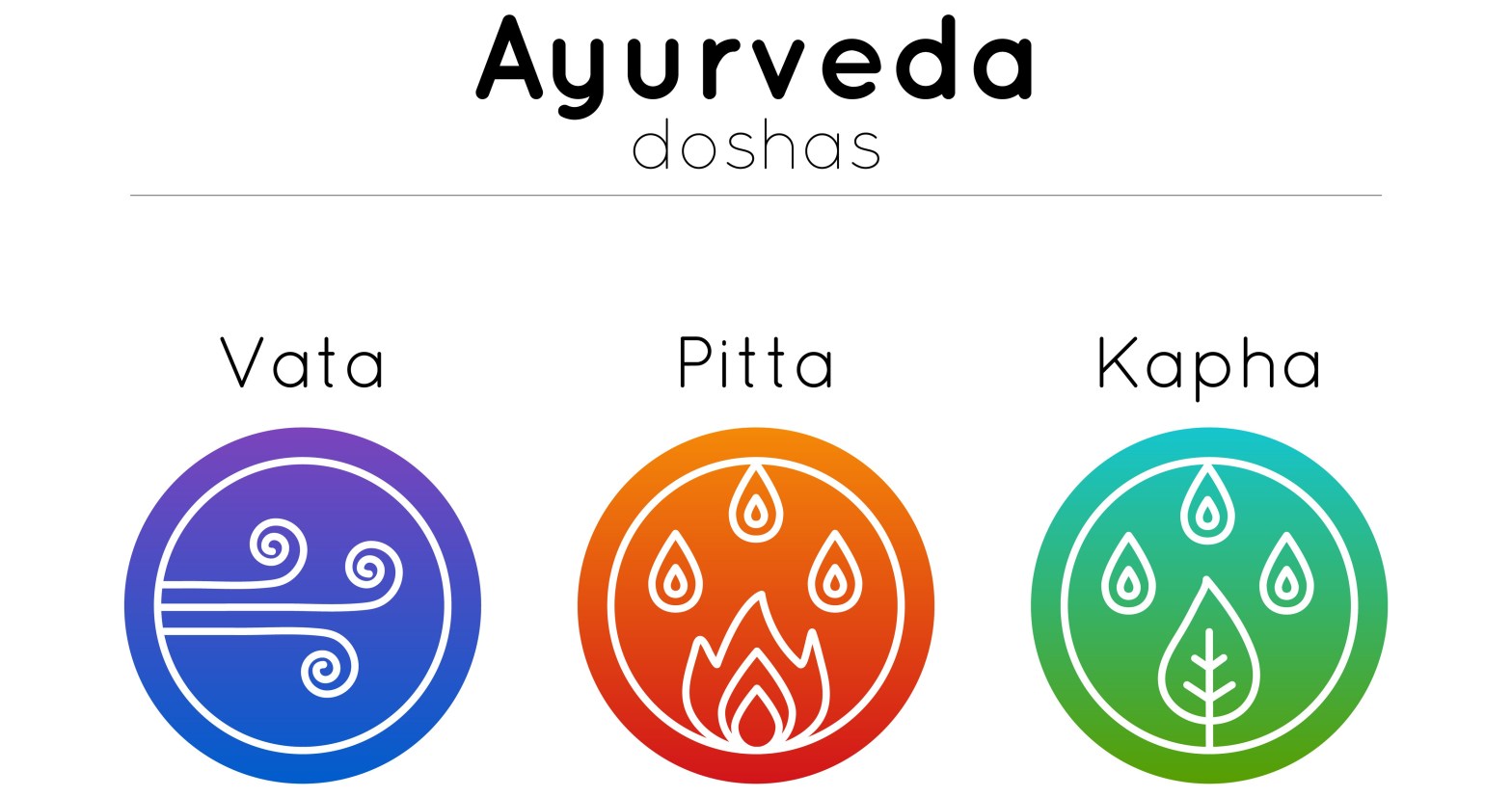
In Ayurveda, the traditional system of medicine that originated in India, the concept of three doshas is fundamental to understanding the balance of health and the individual constitution of a person. The three doshas are Vata, Pitta, and Kapha. Each dosha represents a combination of elements and qualities, and every individual is believed to have a unique constitution with varying proportions of these doshas. Here’s a brief overview of each dosha:
- Vata: Vata is composed of the elements of air and ether (space). It is characterized by qualities such as dry, light, cold, rough, and irregular. Vata governs movements in the body, including nerve impulses, circulation, and digestion. People with a dominant Vata constitution tend to be creative, energetic, and prone to imbalances like anxiety, restlessness, and digestive issues.
- Pitta: Pitta is composed of the elements of fire and water. It is characterized by qualities like hot, sharp, oily, and intense. Pitta governs digestion, metabolism, and transformation in the body. Individuals with a dominant Pitta constitution are often driven, intelligent, and prone to imbalances such as irritability, inflammation, and digestive problems.
- Kapha: Kapha is composed of the elements of earth and water. It is characterized by qualities of heavy, cold, moist, and stable. Kapha governs structure and stability in the body, such as the formation of tissues and mucous production. People with a dominant Kapha constitution tend to be calm, patient, and nurturing but may experience imbalances like sluggishness, weight gain, and respiratory issues.
Ayurveda seeks to maintain or restore balance among these three doshas to promote overall health and well-being. An individual’s constitution (Prakriti) is determined by their unique combination of these doshas. Ayurvedic treatments, including dietary and lifestyle changes, herbal remedies, and therapies, are prescribed based on one’s constitution and any current imbalances (Vikriti) to help bring the doshas into harmony.
 Vitalichi